A sample of what I build: websites, booking and ordering systems, AI tools, and fixes for existing sites. It's only a small part of my work. In my full-time roles I've built much more at scale, including a search engine, high-performance APIs, fast and complex frontend pages, databases and microservices. Pick a category to narrow it down.
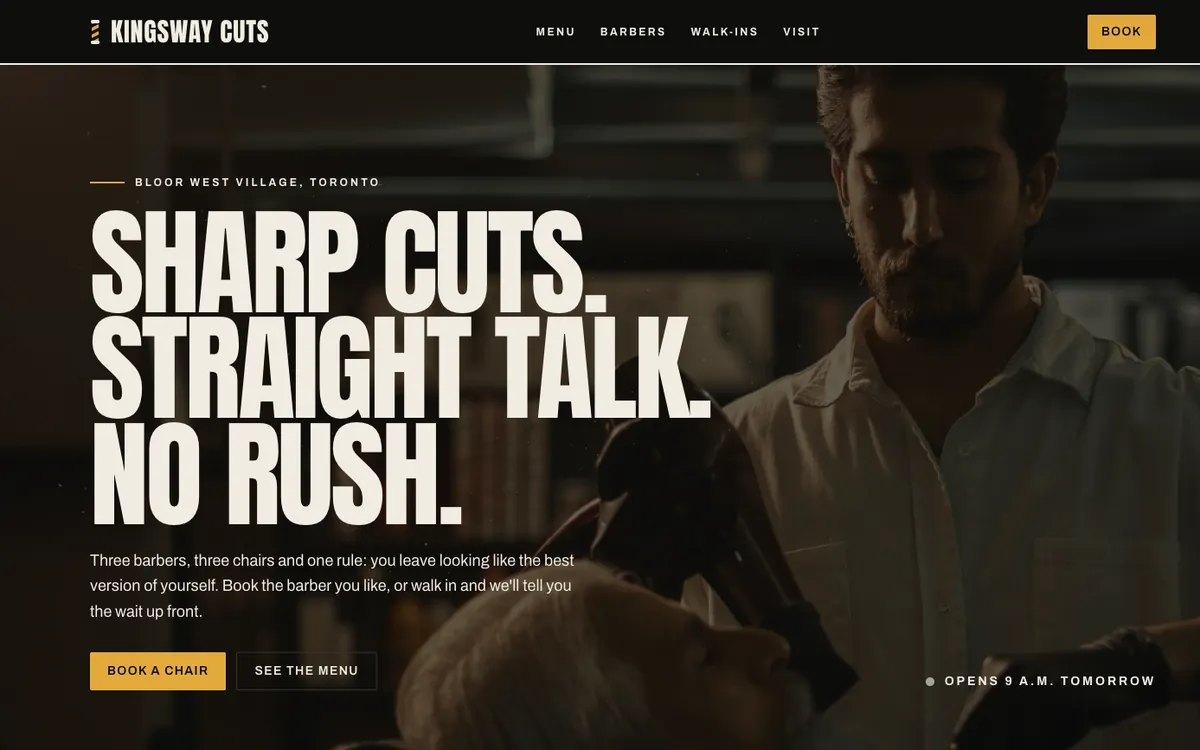
A bold website for a three-chair barbershop where customers pick a barber (or the first one free), book a time at midnight, and check the walk-in wait before they leave home. The owner runs the day from a calendar on his phone, and reminders go out on their own.
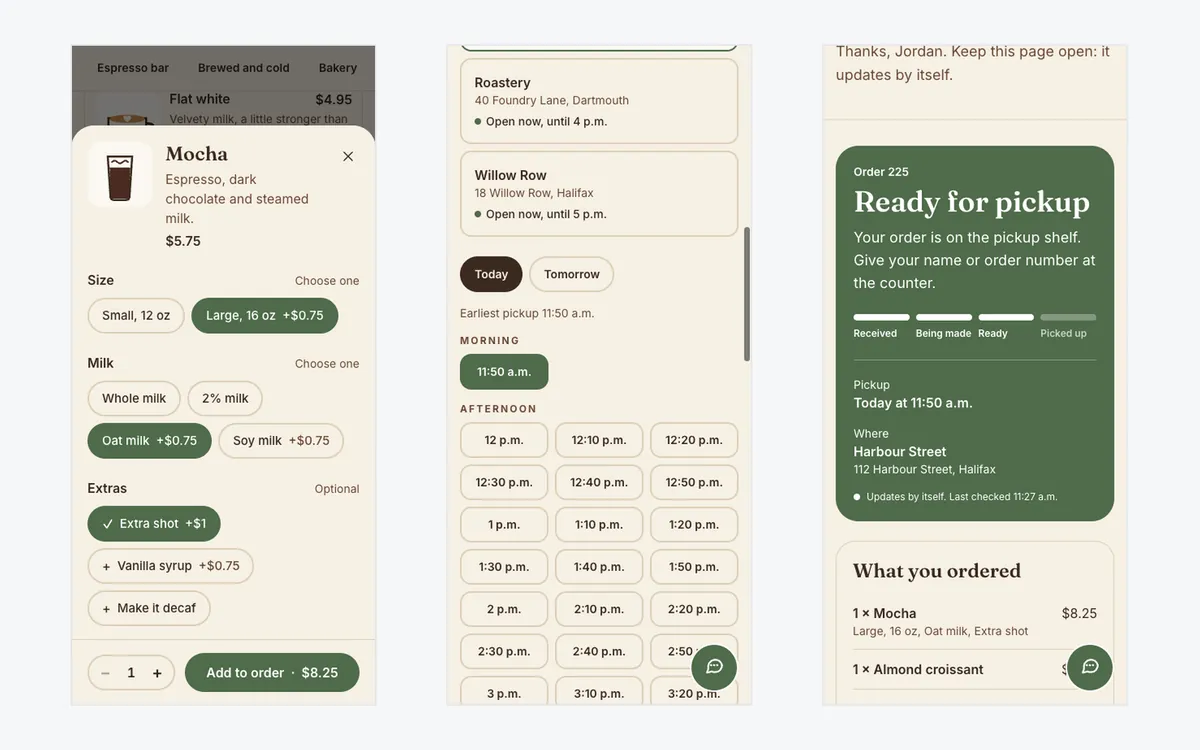
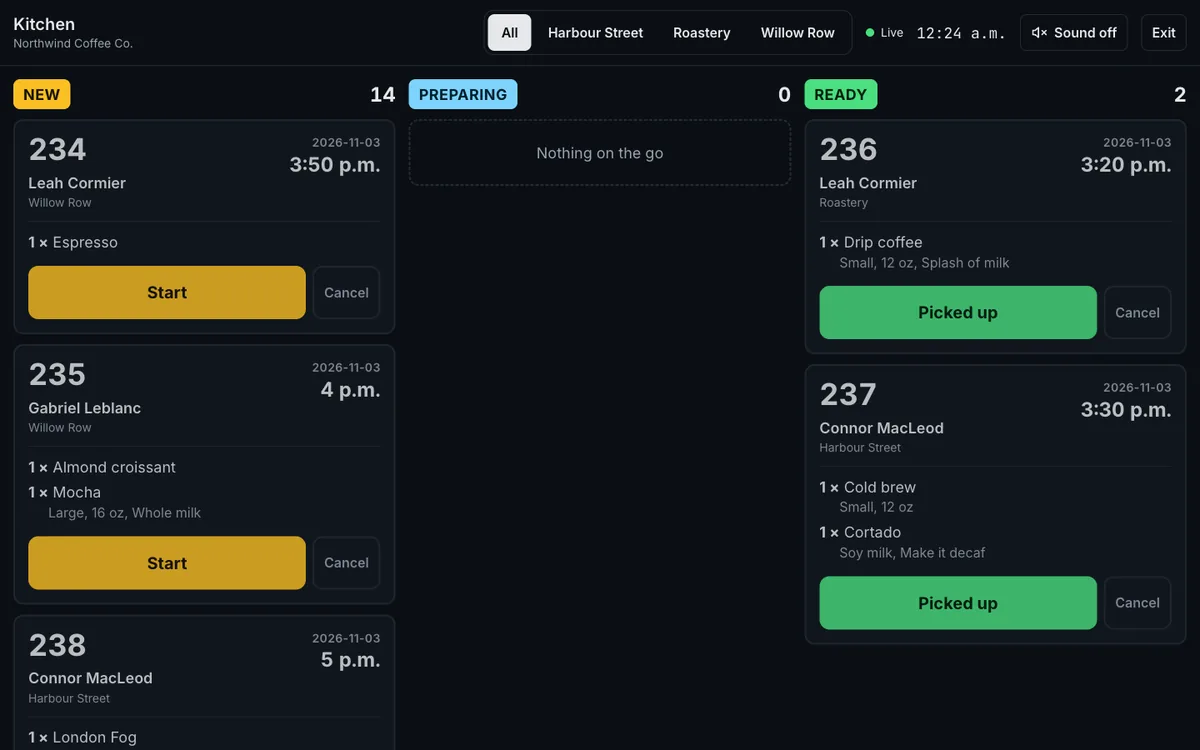
Order-ahead for a café with three locations. Customers order from their phone and pick a pickup time, orders appear on a tablet in the kitchen within seconds, and each table has a QR code for the menu. It also has a support chat.
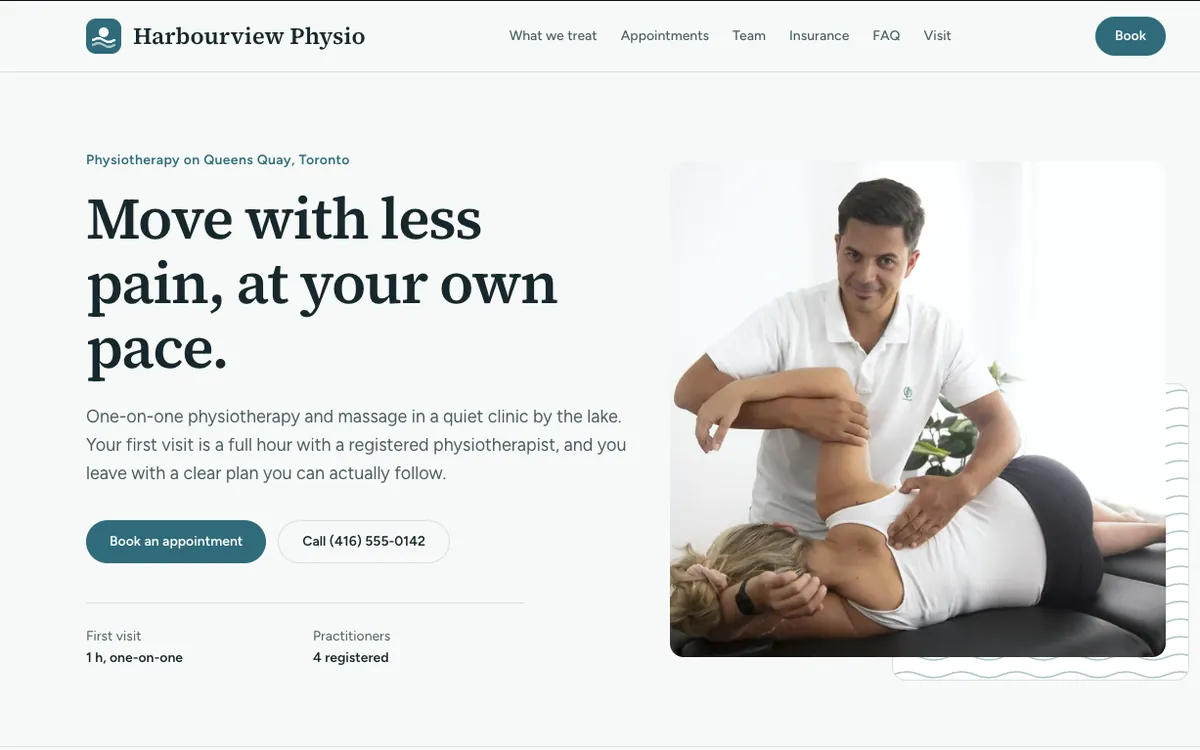
A calm website for a physiotherapy clinic. Patients book by appointment type and practitioner, new patients fill in their health form online before the first visit, and the answers are waiting on the booking when they arrive.
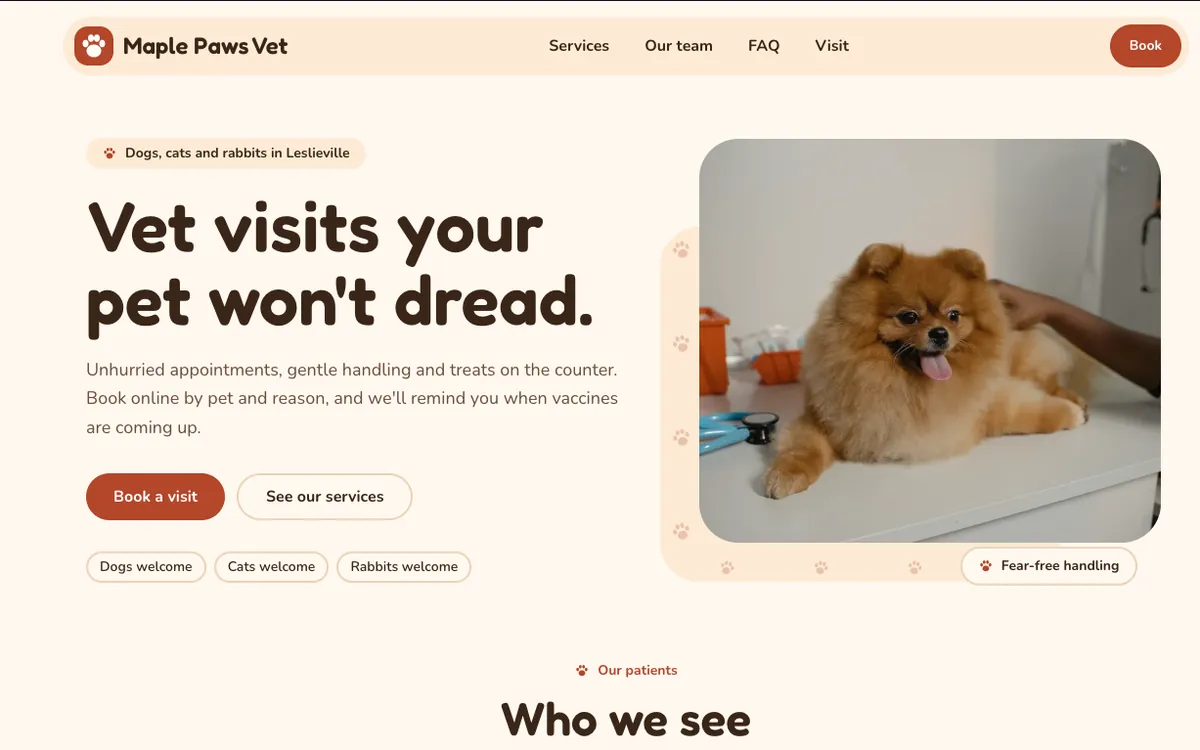
A friendly website for a small animal clinic. Owners book by pet and reason for the visit, the clinic keeps a record for each pet, and vaccination reminders go out on their own with a link that opens booking already filled in.
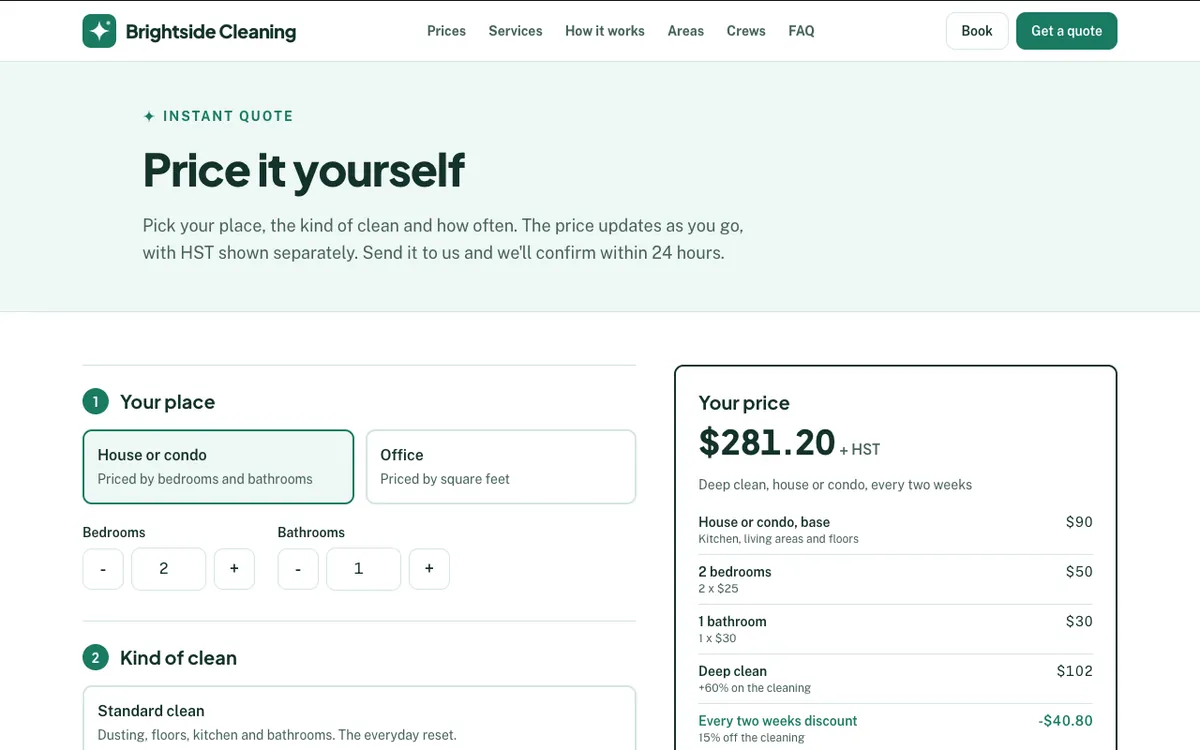
A cleaning company website where customers price their own clean in under a minute, or start from a photo of the space, with every line shown and tax separate, then send the quote in one click. Every request lands in a leads inbox the owner works from new to won to booked.
The private side of five small-business websites: a dashboard where each owner sees the day at a glance, keeps the calendar, customers and messages in one place, and changes prices, menus and hours without calling a developer.
Next.js
TypeScript
Tailwind CSS
Cloudflare Workers
Research and earlier projects
Papers from my MSc research on bin packing, published at computer science conferences, plus earlier data science projects and the startup I founded.
A research paper on square packing, a two-dimensional version of bin packing where square items go into as few square bins as possible. Unlike earlier models, items may be rotated, which matches how stock cutting works in practice.
A research paper on placing replicated tenants onto as few cloud servers as possible while staying safe when a server fails. Tenants arrive one at a time and can't be moved later, so this is an online bin packing problem with fault tolerance built in.
A desktop application that takes a developer's question, collects Stack Overflow results in real time, then ranks and clusters the code snippets in the answers so the useful ones are quick to find.
Classification models that predict the intention behind a code review question, such as asking for a clarification, suggesting an improvement, or asking why something was built a certain way, using the question's words plus key-question, sentiment, and length features.
Visualizations and regression forecasts of the early COVID-19 outbreak, from 22 January to 7 April 2020, using Johns Hopkins CSSE data, comparing polynomial, Bayesian ridge, and support vector regression.
Data mining on 6,000 abdominal aortic aneurysm patient records to find how medical records relate to length of stay at the hospital. After careful preprocessing, some models reached 70 to 84 percent accuracy.
A social network connecting local businesses and their customers. It started as a business plan that was named the "best promising project" at the IUT Entrepreneurship Festival, and I then founded a startup to build it.
Have a project in mind?
Send a short note on what you're building. I'll reply with questions and a rough plan.